


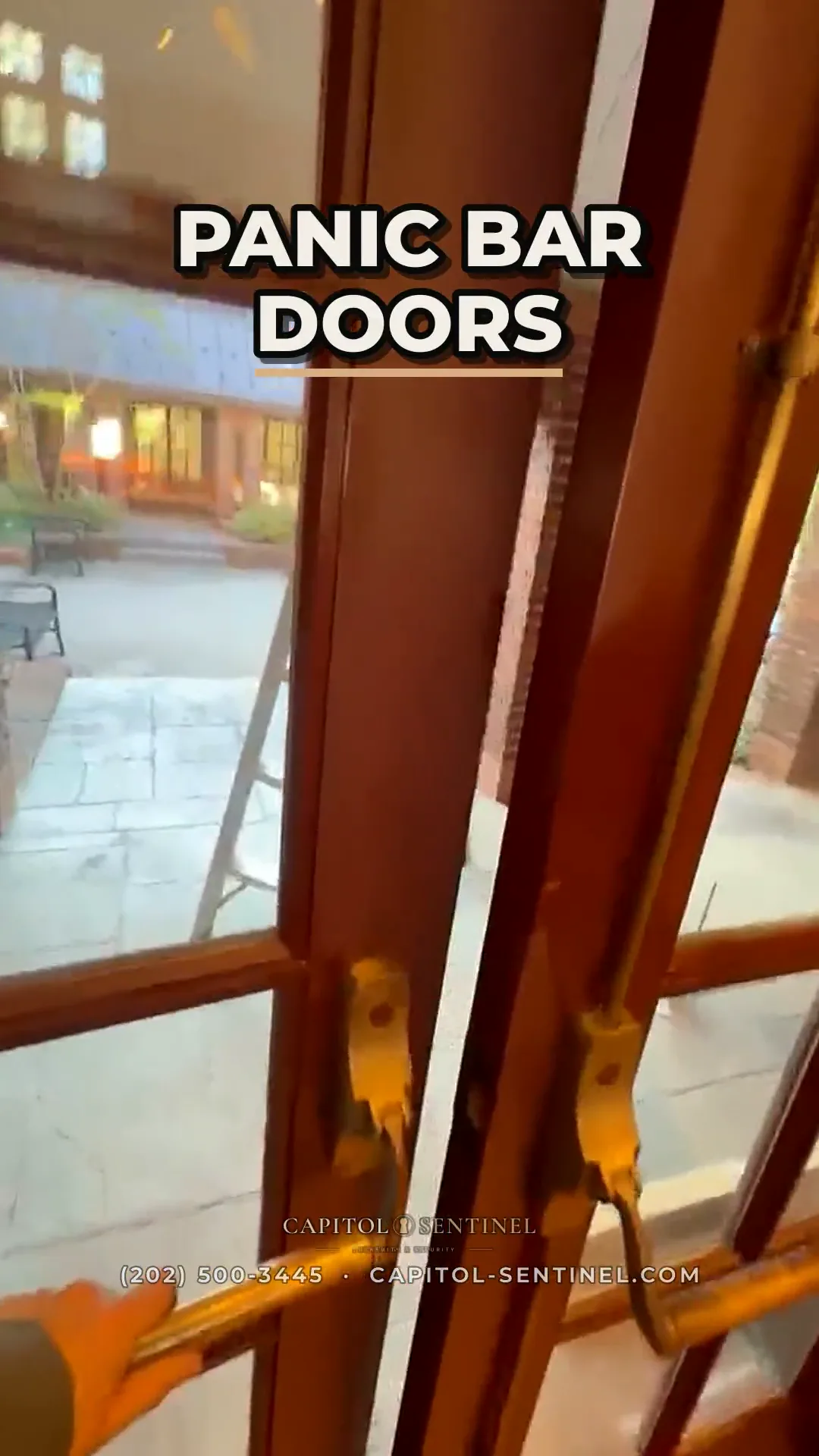
Capitol Sentinel installs, repairs and adjusts panic bars, fire exit hardware, door closers and electrified exit hardware for commercial buildings in Washington, DC, Maryland and Virginia: schools, hospitals and clinics, offices, mixed-use and multifamily properties, and similar facilities. An exit device has to let people out in one motion under pressure, a fire door has to close and latch on its own, and the same opening still has to meet accessibility requirements. We choose hardware for the specific opening, the door construction and the requirements that apply to the building, then install it and test it before we leave.
Our showroom is at 1664 Columbia Road NW, Unit A, Washington, DC 20009. Facility staff are welcome to look at exit devices, closers, strikes and access control hardware before booking work, so decisions about device type, trim and finish are made with the hardware in hand rather than from a catalog page. Call (202) 500-3445.
Who we work with
We work with the people responsible for keeping doors in service: facility managers carrying an opening list across a building or campus; school and hospital operations staff who deal with corridor, stair, suite and equipment-room doors every day; property managers handling tenant fit-outs, turnover and inspection findings; and contractors who need the hardware on an opening installed correctly.
Typical openings include pairs of doors at assembly spaces, cross-corridor doors, stairwell doors, aluminum storefront entries, service and mechanical rooms, and doors that are held open during the day. If an opening carries a fire rating or sits on an exit path, the hardware on it matters.
Panic and exit devices
Exit hardware is chosen by door type, door construction and how the door has to latch. The four common configurations are rim, surface vertical rod, concealed vertical rod and mortise.
Rim exit devices. The device mounts on the push side of the door and its latch engages a strike on the frame. Rim devices are a straightforward choice for single doors and are simple to service because everything sits on the surface. On a pair of doors, rim devices are typically used with a mullion between the leaves, often a removable one so the full opening can be cleared when needed.
Surface vertical rod exit devices. Rods run up and down the push side of the door and latch at the top and bottom of the opening. This is a common answer for pairs of doors that need to latch without a center mullion. The rods are visible and adjustable, which helps when a door has sagged or the floor has shifted, though the bottom rod and strike take wear at the threshold.
Concealed vertical rod exit devices. The rods run inside the door and latch at the top and bottom. The door looks clean from both sides, which is why concealed rods are common on aluminum storefront pairs and on hollow metal or wood doors where appearance matters. They depend on a door prepared for them and are less forgiving when an opening is out of square, so door and frame condition is checked first.
Mortise exit devices. A mortise lock body sits in a pocket in the door edge and the bar retracts its latch. Mortise devices suit hollow metal and wood doors with the right preparation and give a strong single latch point. They are a common choice where heavier-duty latching, a specific trim or an electrified function is needed.
Beyond the device type, the decisions include the outside trim (none, pull, lever or key), the finish, the handing, and whether the device may be dogged, meaning its latch held retracted during busy hours. Whether dogging is allowed depends on whether the door is fire-rated.
Fire-rated openings
Fire exit hardware is not the same as panic hardware. Panic hardware is listed to UL 305. Fire exit hardware is panic hardware that is also listed to UL 10C for use on fire doors. On a fire door that needs an exit device, the device has to be fire exit hardware.
Positive latching. A fire door has to close and latch on its own. For that reason fire exit hardware is not equipped with mechanical dogging. Where a building wants rated doors unlatched during the day, an electric latch retraction arrangement may be used only where it lets the latch project automatically in a fire condition, as the listing and the authority having jurisdiction allow.
Door labels. Fire doors carry a label that identifies the rated assembly. A door with fire exit hardware must carry a label stating that it is to be equipped with fire exit hardware. That is one reason an exit device should not simply be added to a rated door that was prepared for a lockset. When we look at an opening, we photograph and record the door and frame labels so replacement hardware fits the assembly the labels describe.
Changes within the listing. NFPA 80 allows limited job-site work on a fire door, such as holes for surface-applied hardware. Other field modifications need written authorization from the laboratory the door is listed with. If an opening needs a different device, a new closer or an electrified function, the change has to stay within what the assembly allows.
Where panic hardware is required. Under the International Building Code, swinging doors serving Group H occupancies, and doors serving rooms or spaces with an occupant load of 50 or more in assembly (Group A) or educational (Group E) occupancies, may not have a latch or lock other than panic or fire exit hardware, with limited exceptions. NFPA 101, the Life Safety Code, sets the threshold for assembly, educational and day-care occupancies at 100 or more occupants. The actuating portion of the device has to extend at least one-half the width of the door leaf, and the unlatching force may not exceed 15 pounds. Door handles, latches, locks and other operating devices, including exit devices, are mounted between 34 and 48 inches above the finished floor.
Door closers
Closers do much of the work on a life-safety opening. They bring a fire door back to the frame so it can latch, they control how fast the door swings, and they largely decide how hard the door is to open. Closer selection takes in door size and weight, exterior exposure and wind, traffic, mounting position and how the door is actually used.
Adjustment matters as much as selection. A closer set too fast slams the door and works the frame and hardware loose. A closer with too little latch speed leaves the door resting against the strike without latching, which defeats a fire door. A rated door that has to be held open needs a hold-open arrangement that releases the door to close and latch on alarm, not a wedge or kick-down stop.
The 2010 ADA Standards limit the force to push or pull open an interior hinged door that is not a fire door to 5 pounds. Fire doors are set to the minimum opening force the authority having jurisdiction allows. Closers are adjusted so the door takes at least 5 seconds to move from 90 degrees open to 12 degrees from the latch.
Electrified hardware and delayed egress
Electric latch retraction. The device withdraws its latch on a signal from an access control system, a schedule or a switch, so a door can be unlatched for business hours or released remotely while still giving free egress from inside.
Electrified trim. The outside lever or pull is locked and unlocked electrically while the inside bar keeps working mechanically. It is a common way to add card or keypad access to an exit device without changing how people leave.
Request-to-exit and monitoring. When an exit device is tied into access control, the system has to know when someone is leaving and whether the door is actually closed and latched. We plan the device, the trim, the switches and the power together so the door and the system agree.
Delayed egress. Delayed egress holds an exit door for a short, fixed delay to discourage unauthorized exits. NFPA 101 permits it only on doors serving low- and ordinary-hazard contents, in buildings protected throughout by an approved, supervised automatic sprinkler or fire detection system, and only where the occupancy chapter allows it. Pushing the device with no more than 15 pounds of force for no more than 3 seconds starts an irreversible release within 15 seconds, or 30 seconds where the authority having jurisdiction approves, and sounds an alarm at the door. The lock releases when the sprinkler or detection system activates and when power is lost. The door carries a sign that reads "PUSH UNTIL ALARM SOUNDS, DOOR CAN BE OPENED IN 15 SECONDS," and the egress side needs emergency lighting. Because the conditions are specific, delayed egress is reviewed with the authority having jurisdiction before it goes in.
Accessibility and life-safety code points
Under the 2010 ADA Standards, handles, pulls, latches, locks and other operable parts on doors are mounted 34 to 48 inches above the floor and must work with one hand, without tight grasping, pinching or twisting of the wrist.
NFPA 101 calls for new panic and fire exit hardware to be mounted between 34 and 48 inches above the floor.
A door that is required to have panic hardware may not carry added locking devices such as a padlock, chain or separate deadbolt, and the panic hardware may not be fitted with anything that stops the latch from releasing when the bar is pushed.
Fire door assemblies are inspected and tested after installation and at least once a year under NFPA 80, with a written record kept.
Washington, DC currently enforces the 2017 DC Construction Codes, which are based on the 2015 International Code Council model codes with District amendments. Maryland and Virginia jurisdictions adopt their own editions. What applies to a given door depends on the adopted code, the occupancy and the authority having jurisdiction, such as the DC Department of Buildings or the fire marshal. We can help you review an opening against the requirements that apply to it; final approval rests with the authority having jurisdiction.
Inspection, repair and upkeep
NFPA 80 requires fire door assemblies to be inspected and tested at least annually, and after installation and maintenance work, with written records. The inspection confirms, among other things, that the door closes completely from the full-open position and that the latch secures it closed.
Capitol Sentinel performs annual fire door inspections, and we repair what inspections turn up: exit devices that no longer latch, worn latches and strikes, vertical rods out of adjustment, closers that slam or fail to latch the door, loose or missing fasteners, and hardware that does not match the door's label. After a repair, we check the door again.
Doors that cycle all day wear in predictable places: the latch, the strike, the bottom rod, the closer and the screws holding them. Catching those early keeps a rated opening closing and latching and keeps an exit door releasing in one motion.
Urgent door problems
For a door that will not latch, will not lock, or will not let people out, call (202) 500-3445. The emergency line is answered 24/7.
How a job works
Every job starts with the opening. We look at the door and frame and record the details that decide what will fit: door material and thickness, single door or pair, handing, existing preparation, frame condition, finish, and the door and frame labels. We photograph the door faces, the edge, the existing hardware and the labels.
From there we recommend hardware for each opening and note anything that should be reviewed with the authority having jurisdiction. Installation follows the hardware manufacturer's instructions and the door's listing, and we test the door before we leave: full open to closed, latching, closer speed, device operation and any electrified function.
If you are planning work, it helps to send photos of the door from both sides, the edge, the existing hardware and any label on the hinge edge of the door or frame.
Talk to us about your openings
Whether you are working through an inspection list, planning hardware for a renovation, or dealing with one door that will not behave, we are glad to look at it. Visit the showroom at 1664 Columbia Road NW, Unit A, Washington, DC 20009 to see exit devices, closers, strikes and access control hardware, or call (202) 500-3445.
Call (202) 500-3445
Frequent questions
What is the difference between panic hardware and fire exit hardware?
Panic hardware is listed to UL 305 and releases the latch when the bar is pushed. Fire exit hardware is panic hardware that is also listed to UL 10C for use on fire doors. It has no mechanical dogging, because a fire door has to latch. A fire door that needs an exit device needs fire exit hardware.
When does a door need a panic bar?
Under the International Building Code, swinging doors with a latch or lock that serve rooms or spaces with 50 or more occupants in assembly or educational occupancies, or that serve Group H occupancies, need panic or fire exit hardware, with limited exceptions. NFPA 101 sets the threshold at 100 or more for assembly, educational and day-care occupancies. Which rule governs depends on the code your jurisdiction enforces.
Can we hold the latch back on our fire doors during the day?
Not with mechanical dogging. Fire exit hardware does not have it. Electric latch retraction may be used only where the latch projects automatically in a fire condition, within the listing and with the approval of the authority having jurisdiction.
Can you add a panic bar to an existing fire door?
Sometimes. The door's label has to allow fire exit hardware, and the work has to stay within the assembly's listing. A rated door prepared only for a lockset often is not suitable. We check the labels first.
How often do fire doors need to be inspected?
NFPA 80 requires fire door assemblies to be inspected and tested at least annually, and after installation and maintenance work, with written records. Capitol Sentinel performs annual fire door inspections.
What does delayed egress require?
Under NFPA 101: a building protected throughout by an approved, supervised sprinkler or fire detection system; an occupancy that permits it; release within 15 seconds (30 where approved) after no more than 15 pounds of force for no more than 3 seconds; an audible alarm; release on fire alarm or sprinkler activation and on loss of power; the required sign; and emergency lighting on the egress side.
What are the accessibility requirements for door hardware?
Under the 2010 ADA Standards, operable parts are mounted 34 to 48 inches above the floor and work with one hand without tight grasping, pinching or twisting of the wrist. Interior hinged doors that are not fire doors open with no more than 5 pounds of force. Closers take at least 5 seconds to move the door from 90 degrees to 12 degrees from the latch.
Which code applies to our building in DC?
DC currently enforces the 2017 DC Construction Codes, based on the 2015 ICC model codes with District amendments. The occupancy and the authority having jurisdiction determine what applies to a specific door. We can help you review the opening; final approval rests with the authority having jurisdiction.
Can we see the hardware before we decide?
Yes. Exit devices, closers, strikes and access control hardware are in the showroom at 1664 Columbia Road NW, Unit A. Call (202) 500-3445 to talk through your openings.